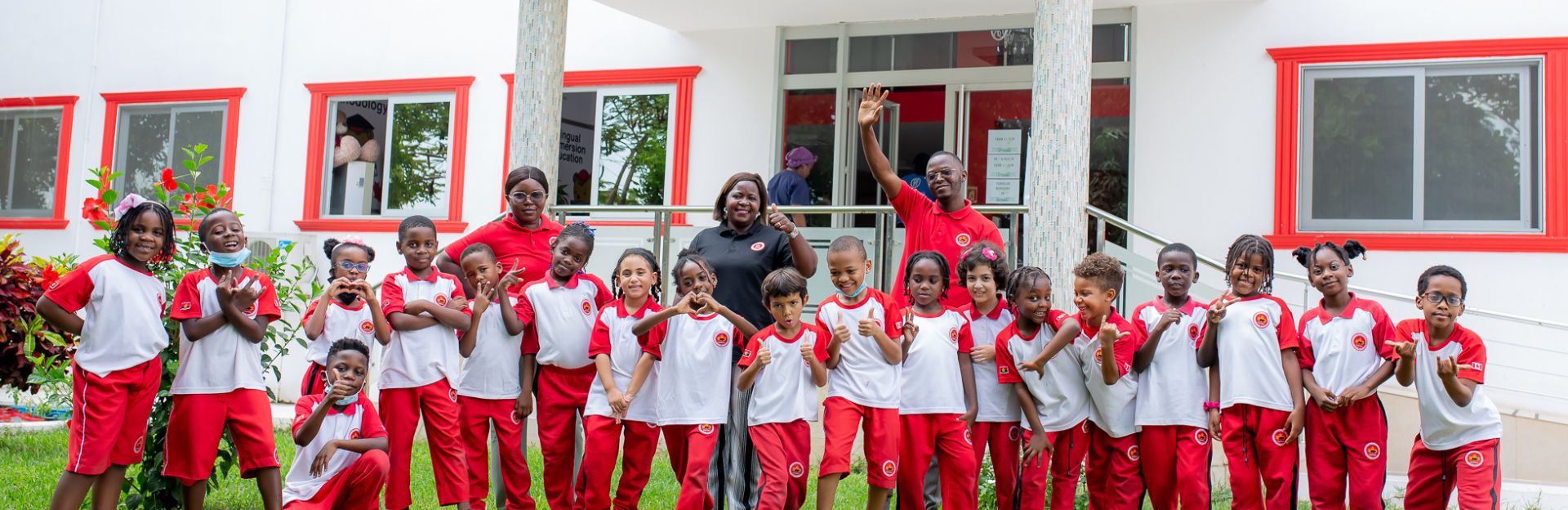
More parents in Angola are asking the same question: "How can I give my child the best chance at a bright future?" The answer many are finding is bilingual education in Angola.
Speaking two languages fluently isn't just nice to have anymore. It's becoming necessary. Kids who grow up speaking both English and Portuguese have more doors open to them—better jobs, more opportunities to study abroad, and the confidence to work anywhere in the world.
Maple Bear Angola brings this opportunity to families in Luanda through a proven Canadian teaching method. Let's talk about why bilingual learning matters and how it actually works in the classroom.
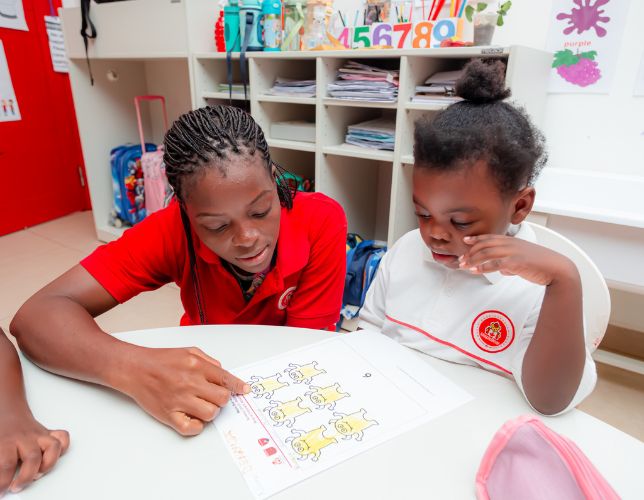
Bilingual education in Angola means your child learns in two languages from day one. Not just language classes twice a week—we're talking full immersion.
Think about how you learned Portuguese as a child. Nobody sat you down with grammar books. You just listened, played, talked, and naturally picked it up. That's exactly how children learn at a bilingual school in Angola like Maple Bear.
Traditional schools teach English as a subject. Bilingual schools teach in English. Big difference. Your child learns math, science, art, and play—all while naturally becoming fluent in both Portuguese and English.
Angola is growing fast. Our economy is opening up. International companies are setting up offices here. Young Angolans are competing for opportunities that didn't exist ten years ago.
English has become the language of business worldwide. If your child wants to work for an international company, study at a top university, or even start their own global business, English fluency isn't optional.
But here's what many parents worry about: "Will my child lose their Portuguese?" Not at Maple Bear. The goal is strong skills in both languages. Your child stays connected to their culture and home language while gaining the tools for global success.
The demand for English language learning is huge in Luanda. But quality options that truly teach children to think and speak in English? Those have been hard to find—until now.
More parents in Angola are asking the same question: "How can I give my child the best chance at a bright future?" The answer many are finding is bilingual education in Angola.
Speaking two languages fluently isn't just nice to have anymore. It's becoming necessary. Kids who grow up speaking both English and Portuguese have more doors open to them—better jobs, more opportunities to study abroad, and the confidence to work anywhere in the world.
Maple Bear Angola brings this opportunity to families in Luanda through a proven Canadian teaching method. Let's talk about why bilingual learning matters and how it actually works in the classroom.
Maple Bear uses the Canadian bilingual immersion model—a system perfected over 50 years and consistently ranked among the best in the world.
Here’s how it works inside Maple Bear Angola classrooms:
Children don’t memorize words from textbooks. They learn by using both languages throughout their day. Story time may be in Portuguese, while an art project might be guided in English. Songs, games, and group activities shift between the two languages naturally.
Learning happens through doing. Kids absorb English while building with blocks, role-playing, solving puzzles, and interacting with classmates. The same happens with Portuguese. When language learning is embedded in play and discovery, children don’t even realize they’re “studying.”
Both languages grow together. Teachers are trained to balance English and Portuguese strategically. They know when to introduce each language, helping the child’s brain become more flexible and adaptive.
The results go beyond language. Bilingual immersion strengthens memory, attention, and cognitive flexibility. Children become better problem solvers because their brains learn to switch between two ways of thinking.
When you choose bilingual education in Angola at Maple Bear, here's what your child gains:
Fluent English without losing Portuguese. Your child will speak, read, and write confidently in both languages. They'll feel equally comfortable whether they're at home or in an international setting.
A brain boost that lasts forever. Bilingual children show stronger cognitive skills throughout their lives. They're better at focusing, handling multiple tasks, and thinking creatively.
Better grades and easier learning. Children who learn bilingually often do better in other subjects too. The mental skills they develop help them understand math faster, solve problems better, and think more critically.
Smoother path to international schools and universities. If you want your child to study abroad someday, starting with bilingual education in Angola gives them a huge head start. They'll already be comfortable with English-language academics.
Stronger social and emotional skills. Learning two languages means understanding two perspectives. Bilingual children tend to be more empathetic, better at reading social situations, and more confident in new environments.
Teachers trained to the highest standards. Maple Bear doesn't just hire any English speaker. Teachers go through specialized Maple Bear training to learn the Canadian methodology. They understand child development and know how to create a bilingual classroom that really works.
Maple Bear Angola follows the Canadian curriculum, which is different from traditional teaching. Here's what makes it special:
Kids learn by exploring, not memorizing. The classroom is designed for discovery. Children ask questions, try things out, and learn from experience. Teachers guide rather than lecture.
Every child feels safe and supported. The environment is warm and encouraging. Making mistakes is part of learning. No child is made to feel bad for not knowing something.
Phonics-based English learning. Children learn to read English through sounds and patterns. This proven method makes reading feel natural and fun rather than frustrating.
Language exposure grows gradually. Nobody forces a three-year-old to speak full sentences in English right away. The language comes naturally as children are ready for it.
Focus on the whole child. Academic skills matter, but so do emotions, social connections, and physical development. Maple Bear looks at your child's complete growth.
Let's say your child is in preschool at Maple Bear Angola. What does a typical morning look like?
Circle time might start in Portuguese. Children talk about their weekend, share feelings, and sing a familiar song. Then they break into activity stations.
At the art table, the teacher speaks English. “Let's paint a big tree. What colors do you see?” Kids respond in whatever language they're comfortable with. The teacher gently models English without correcting.
Story time could be a Portuguese tale about Angolan animals. During snack time, children practice English: “Please pass the water.” “Thank you!”
Outside play mixes everything together. Kids shout, laugh, and play pretend in whichever language comes naturally in the moment.
This constant, natural switching is what builds real bilingual fluency. Not forced. Not stressful. Just normal, happy childhood—in two languages.
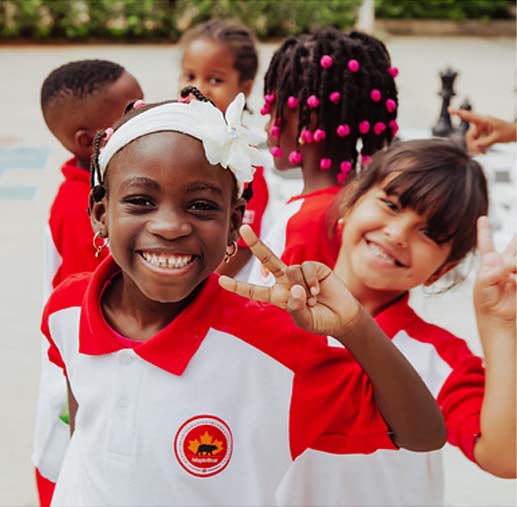
When parents visit Maple Bear Angola and see the classrooms in action, certain things stand out:
Future opportunities. Parents know the world is getting smaller. They want their children ready for international careers, foreign universities, and global connections.
Proven curriculum advantage. The Canadian education system consistently ranks at the top worldwide. Parents trust that Maple Bear's approach will give their child excellent academics.
Communication skills that stand out. Bilingual children simply communicate better. They're more confident speaking up, better at expressing ideas, and more comfortable in diverse settings.
Cultural flexibility. Children who learn two languages also learn to appreciate different perspectives. This cultural awareness is valuable in our increasingly connected world.
Global educational standards brought home. You don't have to send your child abroad to get world-class bilingual education in Angola. Maple Bear brings those standards to Luanda.
There are schools in Angola that teach English classes. But a true bilingual school in Angola like Maple Bear is built differently from the ground up.
Canadian methodology with global trust. Maple Bear has over 600 schools in 40 countries. The system works. Parents around the world trust it.
Certified bilingual teachers. Every teacher receives special training in bilingual immersion techniques. They know how to support children learning in two languages.
Classrooms designed for immersion. Everything from the books on the shelves to the labels on the walls supports bilingual learning. The environment itself teaches.
Safe and nurturing space. Parents consistently mention how warm and welcoming Maple Bear feels. Children are happy to come to school.
Strong parent communication. You're never left wondering what's happening. Teachers keep parents informed about their child's progress in both languages.
Angola is changing. The opportunities available to our children are bigger than what we had growing up. But those opportunities require new skills.
Bilingual education in Angola isn't about being fancy or copying other countries. It's about giving your child real tools for real success. It's about confidence, opportunity, and building a bright future.
At Maple Bear Angola, bilingual learning happens naturally every single day. Children laugh, play, explore, and grow—all while becoming fluent in English and Portuguese.
Want to see it yourself? Visit Maple Bear and watch the classrooms in action. Talk to teachers. Meet other parents. See how happy the children are.
Your child deserves every opportunity to succeed. Bilingual education in Angola through Maple Bear's Canadian methodology can open doors you might not even imagine yet.
Book a tour of Maple Bear Angola and discover what bilingual learning can do for your family. Come see the difference for yourself.
No, children's brains are built for this. Research shows young children easily learn multiple languages without confusion. They naturally understand when to use which language.
Actually, younger is better. Children under six absorb languages most easily. Starting bilingual education in Angola early gives your child the biggest advantage.
That's perfectly fine and actually common. Maple Bear provides the English immersion, and home provides the Portuguese foundation. This combination creates strong bilingual skills.
Most children start speaking basic English within months and reach conversational fluency within two years. Full academic fluency typically develops by age eight or nine when starting young.
Yes, often bilingual learning actually helps. The diverse teaching methods, focus on play-based learning, and multiple ways of understanding concepts can benefit children with different learning styles.